The Seat 1A Mistake
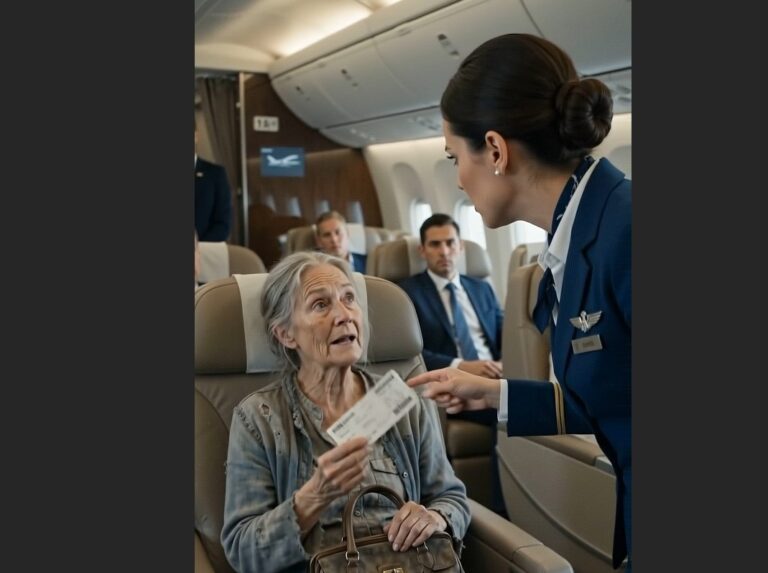
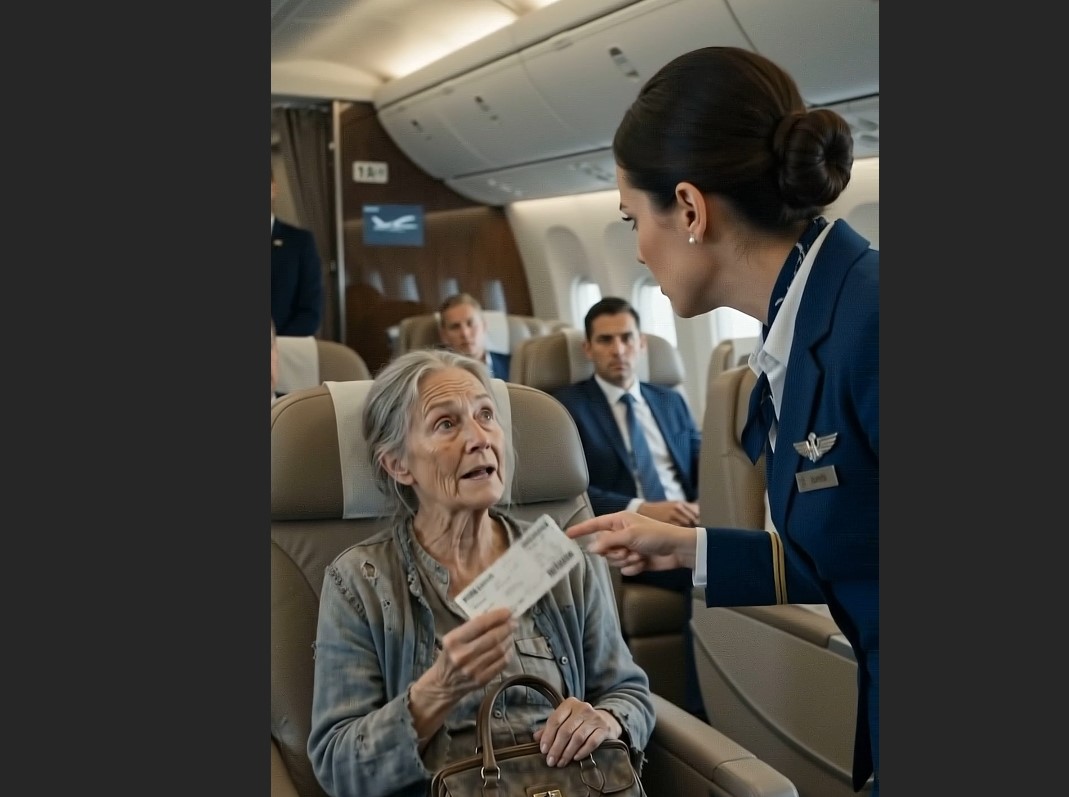
The first-class cabin was quiet, polished, and almost perfectly still. Passengers adjusted their coats, placed their phones on airplane mode, and settled into the soft leather seats before departure. At the front of the cabin, in Seat 1A, an elderly woman sat silently with an old handbag resting on her lap.
Her clothes were simple and worn. Her shoes looked tired from years of use. She did not look like the kind of passenger some people expected to see in the most expensive seat on the aircraft. But she sat calmly, holding her boarding pass in one hand, looking out the window as if she had taken this journey many times before.
Then the flight attendant noticed her.
The attendant stopped in the aisle and stared. Her expression changed quickly from confusion to irritation. She walked toward the elderly woman with sharp steps, drawing the attention of several passengers nearby.
“Ma’am, get up now,” the flight attendant said loudly. “Seat 1A is not for someone like you.”
The cabin fell silent.
The elderly woman turned slowly and looked up at her. Her voice was soft but steady.
“This is my assigned seat.”
The flight attendant gave a cold, impatient smile and pointed at the number above the seat.
“No. You are confused,” she said. “First class is for premium passengers.”
The words were loud enough for everyone nearby to hear. A man across the aisle lowered his newspaper. A woman holding a tablet paused mid-scroll. No one spoke.
The elderly woman reached into her handbag and carefully pulled out her boarding pass.
“My boarding pass says Seat 1A,” she said.
The flight attendant glanced at it only for a second. She did not truly read the name. She seemed more interested in the woman’s clothes than the document in her hand.
“I said stand up,” the attendant snapped. “Do not make me repeat myself.”
The elderly woman’s face showed hurt, but she did not raise her voice.
“I paid for this seat,” she said.
The attendant crossed her arms.
“You walked into the wrong cabin. Move to the back now.”
A few passengers shifted uncomfortably. The situation had become too loud to ignore. The elderly woman remained seated, holding her boarding pass with both hands. She was not trying to embarrass anyone. She was simply refusing to leave a seat that belonged to her.
At that moment, the captain entered the first-class cabin.
He had heard the raised voices from the front of the aircraft. His expression was serious as he approached.
The flight attendant immediately turned toward him.
“Captain,” she said quickly, “this woman is refusing to leave Seat 1A.”
The captain looked at the elderly woman. For a brief moment, he seemed ready to ask a routine question. Then his eyes moved to her face, and everything changed.
His expression softened first. Then he looked shocked.
“Stop speaking,” he said firmly to the flight attendant.
The attendant froze.
The captain took the boarding pass from the elderly woman with great care. He read the name. Then he looked back at the flight attendant with disappointment.
“Do you even know whose name is on that ticket?” he asked.
The cabin became completely silent.
The flight attendant looked confused. She had judged the situation too quickly. She had seen old clothes and assumed the woman did not belong.
The captain turned to the passengers and spoke clearly.
“This woman helped design the safety system this airline still uses today,” he said. “Every person on this aircraft benefits from her work.”
A wave of surprise moved through the cabin. Passengers looked at the elderly woman differently now, not because she had changed, but because the truth had finally been spoken.
The captain lowered his voice and turned back to her.
“Ma’am, I personally apologize for how you were treated,” he said. “Seat 1A is exactly where you belong.”
The elderly woman nodded gently. She did not smile in victory. She did not demand punishment. She simply looked at the flight attendant, who now stood ashamed in the aisle.
Then the elderly woman spoke her final words calmly.
“You checked my clothes before checking my name.”
No one in the cabin forgot that sentence.
It was a reminder that dignity is not measured by appearance, and respect should never depend on how expensive someone looks. Sometimes, the person being judged quietly is the very person who helped build the system everyone else depends on.